56-Product Analysis Reveals Which Brands Meet New Standards
Only 5.4% of granola products pass all six criteria established by registered dietitians. Our comprehensive analysis shows exactly which best granola brands align with 2026 federal dietary guidelines.
The $14 Ancient Grain Awakening
Here's what kills me about the premium granola market. We all WANT to believe that spending $14 on a bag with "superfoods" and pretty packaging means we're making the healthy choice.
I believed it too!
Before starting Merricks Kitchen, I was that person loading up my cart with every "clean" granola brand at Whole Foods. Quinoa! Chia! Probiotics! Ancient grains! If it had beautiful packaging and cost $12-14, I assumed it was good for me.
Then I started actually reading labels beyond the marketing claims.
And... wait.
This "healthy" granola has 12g of added sugar? That's nearly THREE OREO COOKIES worth of sugar. At breakfast.
The "heart-healthy" one uses coconut oil, which research shows raises LDL cholesterol more than butter?
The "high-protein" option gets its protein from the same milk protein isolates used in protein powder, not from actual whole foods?
The "natural" granola lists "natural flavors" as an ingredient. The new federal guidelines explicitly warn against this.
I wasn't mad at the brands. I was mad at myself for not reading carefully enough.
And that's when I realized something important. The premium granola market has a blind spot. Most products were designed to be better than CEREAL. Not to be actually, truly, cardiovascularly GOOD for you on a daily basis.
Better than terrible does not equal actually good.
That realization is why Brekky Mix exists. And why I spent months analyzing 56 granola products to understand exactly where the market stands in today.
What We Established in Part One
In Part 1: How to Find Healthy Granola in 2026, we examined the revolutionary January 2026 Dietary Guidelines for Americans. For the first time in 45 years, these guidelines explicitly warn against ultra-processed foods.
We established six critical criteria that define the best granola brands:
Section 1: Federal Guidelines Criteria
- Added sugar under 5g (federal: "no amount" recommended, but registered dietitians established a realistic target of less than 5g for breakfast)
- Sodium as low as possible (federal: "avoid highly processed foods that are high in sodium")
- Olive oil as primary fat (federal: explicitly recommends "oils with essential fatty acids, such as olive oil")
Section 2: Expert Standards
- Protein minimum 7g from whole foods (RDN Rachel Stahl Salzman, Weill Cornell Medicine)
- Fiber minimum 4g from multiple sources (RDN Julia Zumpano, Cleveland Clinic)
Section 3: Ultra-Processed Food Red Flags
- Zero UPF ingredients (no "natural flavors," protein isolates, or artificial sweeteners)
Section 4: The Oil Controversy
We examined why olive oil beats coconut oil and seed oils for cardiovascular health. This is backed by American Heart Association research.
The critical question: Which granola brands actually meet ALL six criteria?
In Part 2, we answer that question through comprehensive analysis of 56 products.

The Complete Granola Brand Comparison
We analyzed 56 products from major brands available in U.S. markets. All nutritional values are standardized to 1/2 cup servings for accurate comparison.
The results: Among 56 products analyzed, only three meet all six federal and expert criteria simultaneously.
Let me show you what we found, organized by market category.
The Premium "Ancient Grain" Category
11 Products Analyzed | Average Price: $0.60-0.90/oz
These brands revolutionized the granola market. They proved that "healthy could taste good" and introduced millions of Americans to better breakfast options. They deserved every bit of their success for moving the market forward.
But here's what our analysis revealed about this category's nutritional patterns.
Category Averages (11 products)
- Added sugar: 8-12g per 1/2 cup serving (160-240% over expert limit)
- Sodium: 150-210mg average
- Primary oils: Coconut oil (82% saturated fat) or seed oil blends
- Saturated fat: 4-6g per serving (27-40% of daily AHA limit at breakfast alone)
- Protein: 4-5g average (36% below expert minimum)
- Fiber: 3-4g average (meets minimum but at low end)
- Ultra-processed ingredients: Most use "natural flavors" or probiotic additives
Federal Guidelines Alignment
✗ Violates "no amount of added sugars" recommendation (8-12g)
✗ Violates "avoid highly processed foods that are high in sodium" (150-210mg)
✗ Contradicts explicit olive oil recommendation (uses coconut oil)
✗ Often contains UPF ingredients ("natural flavors," processing aids)
✓ Generally uses organic ingredients (positive)
Category Performance: Passes 1-3 of 6 criteria on average
Why These Patterns Exist
"When I evaluate granola formulations, I see products designed to answer the question 'How do we make granola better than sugary cereal?'" explains Chandler Ray, Registered Dietitian Nutritionist.
"That was the right question 10-15 years ago. These brands succeeded at that mission. They proved healthy could be delicious and moved millions of consumers toward better choices."
"But the question has evolved. In 2026, we're asking 'How do we design breakfast around cardiovascular research and federal guidelines?' That's a fundamentally different starting point, which leads to fundamentally different nutritional profiles."
The Reality Check
Products in this category are genuinely better than mass-market cereal. But they were formulated before 2026 guidelines existed. They beat Frosted Flakes and Honey Bunches of Oats, but they weren't designed for optimal daily cardiovascular health.
Better than terrible is still not optimal.
Category Verdict: Occasional treat, not daily breakfast foundation.
The High-Protein Category
8 Products Analyzed | Average Price: $0.70-1.25/oz
The Promise: Protein-focused granola brands for active lifestyles
The Reality: High numbers achieved through ultra-processed shortcuts
Category Patterns We Found
Whey/Milk Protein Isolate Products (5 analyzed):
- Protein: 10-12g per serving (looks impressive)
- Source: Milk protein isolate, whey protein concentrate
- Added sugar: 6-8g average (or artificial sweeteners)
- Sodium: 60-165mg
- Processing: Chemical extraction, heat treatment, spray drying
Plant Protein Isolate Products (3 analyzed):
- Protein: 8-10g per serving
- Source: Pea protein isolate, rice protein isolate
- Added sugar: 5-7g (or monk fruit, allulose)
- Sodium: 90-150mg
- Processing: Multiple extraction and purification steps
Federal Guidelines Alignment
✗ Contradicts call for "nutrient-dense protein foods" (isolates strip away naturally occurring vitamins, minerals, fiber, healthy fats)
✗ Many use artificial sweeteners (violates "no non-nutritive sweeteners" guidance and trains your palette to crave sweet foods)
✗ None use recommended olive oil
✓ High protein numbers (but wrong source)
Category Performance: Passes 1-2 of 6 criteria on average
Understanding Protein Isolates
"High protein numbers look impressive on labels, but the source matters tremendously," notes Chandler Ray, RDN. "Protein isolates are created through chemical extraction, heat treatment, and spray drying. You're getting protein grams without the naturally occurring vitamins, minerals, healthy fats, and fiber that come with whole food protein sources."
"Federal guidelines emphasize 'nutrient-dense protein foods' for a reason. When you eat 8g of protein from whole almonds, you also get vitamin E, magnesium, healthy fats, fiber, and polyphenols. When you eat 8g from milk protein isolate, you get just protein. That's it. Isolates aren't nutrient-dense. They're nutrient-stripped."
The Comparison
- 8g from isolates: Just protein, heavily processed
- 8g from whole food ingredients including certified gluten-free oats, almonds, walnuts, sunflower seeds, pepitas, ground flaxseed, psyllium husk, and coconut: Protein + B vitamins + iron + zinc + magnesium + vitamin E + omega-3s + fiber + polyphenols + bioactive compounds
Category Verdict: Protein achieved the wrong way. Not among best choices for daily nutrition.
The Zero-Sodium Specialty Category
11 Products Analyzed | Average Price: $0.42-1.46/oz
This is where things get interesting.
Among 56 products analyzed, only 11 achieve zero sodium (19.6% of market). Zero sodium is rare and valuable. But it turns out zero sodium alone doesn't make a product optimal.
Category Patterns
Products Using Seed Oils (4 of 11):
- Sodium: 0mg ✓
- Oils: Sunflower oil, canola oil
- Added sugar: 4-6g (mostly meets limit)
- Protein: 6-8g ✓
- Federal oil recommendation: ✗ (not olive oil)
Products Using Coconut Oil (3 of 11):
- Sodium: 0mg ✓
- Oil: Coconut (82% saturated fat)
- Saturated fat: 4-6g per serving (high)
- Federal oil recommendation: ✗
- Added sugar: varies widely
Products With High Sugar (4 of 11):
- Sodium: 0mg ✓
- Added sugar: 8-12g (160-240% over limit) ✗
- Most other criteria: ✓
- Federal sugar recommendation: ✗
The Zero-Sodium Paradox
Zero sodium is excellent. It's one of only six criteria and only 19.6% of products achieve it. But most zero-sodium products compromise on oil quality (coconut or seed oils instead of olive) or sugar content.
Zero Sodium + Olive Oil (The Holy Grail)
Only 5 products out of 56 (8.9%) achieve both zero sodium AND use extra virgin olive oil.
Of those 5 products:
- 2 exceed sugar limits suggested by dietitians
- 3 meet all six criteria (all three are Brekky Mix varieties)
Category Insight: Zero sodium is valuable but insufficient alone. You need zero sodium + olive oil + controlled sugar + whole food protein + adequate fiber + clean ingredients.
Category Verdict: Some excellent options exist, but most compromise on other criteria.
The Chocolate Granola Category
7 Products Analyzed | Average Price: $0.75-1.46/oz
The Challenge: Creating chocolate satisfaction without excessive sugar
Category Averages
- Added sugar: 8-12g per serving (most chocolate granolas)
- Saturated fat: 5-7g (from chocolate + coconut oil combination)
- Sodium: 60-180mg
- Protein: 4-6g average
The Chocolate Dilemma
Conventional chocolate granola relies on refined sugar to create chocolate flavor. The combination of chocolate + sugar + coconut oil typically delivers:
- 300-350 calories per 1/2 cup
- 8-12g added sugar
- 5-8g saturated fat
- Results: Tastes like dessert, nutritionally functions like dessert
Category Performance: Most pass 0-2 of 6 criteria
The Exception Pattern
One product (Brekky Mix Choc Chip) achieves:
- 2g added sugar per 1/3 cup label serving (revolutionary for chocolate)
- Date-sweetened fair-trade chocolate (no refined sugar in chocolate)
- Extra virgin olive oil base
- 0mg sodium
- Passes all 6 criteria even in chocolate variety
How This Is Achieved
Premium ingredients (Ceylon cinnamon, Madagascar vanilla powder) create flavor depth. This allows dramatically reduced sugar while maintaining satisfaction. Natural chocolate richness + ingredient complexity = chocolate experience without sugar dependence.
Category Verdict: Most chocolate granolas are dessert disguised as breakfast. Rare exceptions exist.
Best Granola Brands That Pass All Six Criteria
Required for "best granola brands" designation:
✓ Under 5g added sugar from single source
✓ 7g+ protein from whole foods (not isolates)
✓ 4g+ fiber from multiple sources
✓ Zero sodium
✓ Extra virgin olive oil (not coconut or seed oils)
✓ Zero ultra-processed ingredients
Results of 56-Product Analysis
- 9 products use extra virgin olive oil (16%)
- 11 products achieve zero sodium (19.6%)
- 5 products combine both zero sodium + olive oil (8.9%)
- Only 3 products meet all six criteria simultaneously (5.4%)
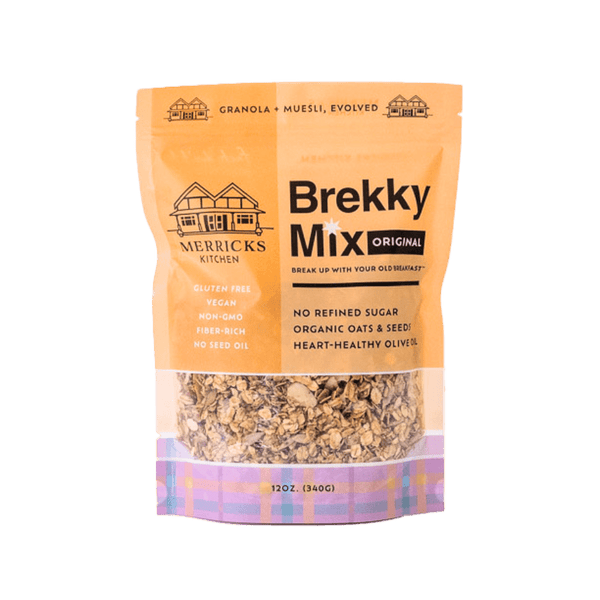
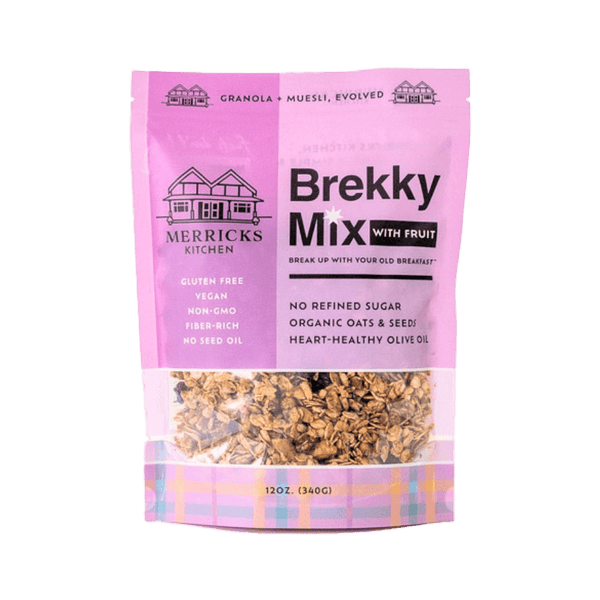
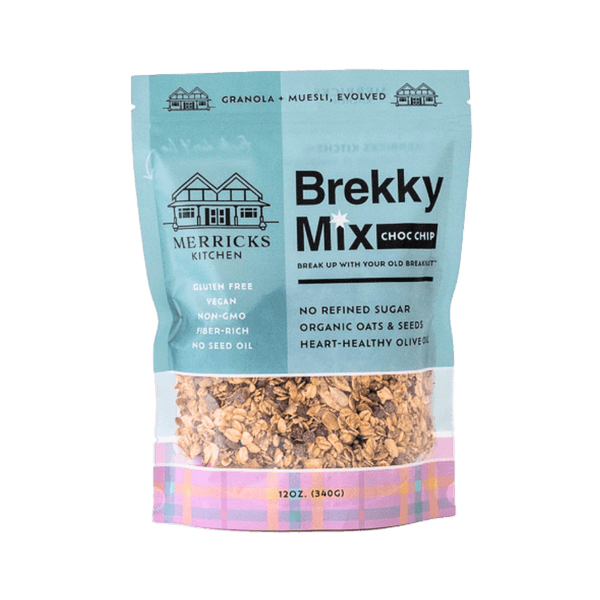
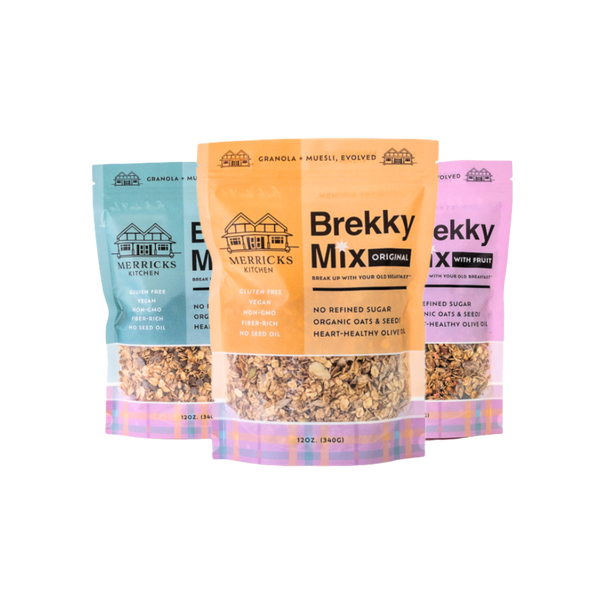
Those three products: Brekky Mix Original, Brekky Mix With Fruit, Brekky Mix Choc Chip
"After reviewing the 2026 federal dietary guidelines and comparing them against every major granola category available, Brekky Mix is the only product line that checks every single box," says Chandler Ray, RDN.
"Zero sodium. Olive oil base. Minimal added sugar from a single source. Whole food protein. Clean ingredients with no 'natural flavors' or isolates. This alignment isn't marketing spin. It's what happens when you design around optimal health rather than cost minimization. Most granola brands compromise on at least three criteria. Finding one that doesn't compromise at all is remarkable in this market."
Brekky Mix: The Only Brand Meeting All Federal Standards
Complete Nutritional Profiles (1/2 Cup Standardized)
Brekky Mix Original:
- Calories: 270
- Protein: 8g (whole food sources)
- Fiber: 6g (multiple sources)
- Added Sugar: 3g (40% below limit)
- Sodium: 0mg
- Saturated Fat: 2.5g
- Oil: Extra virgin olive oil
Brekky Mix With Fruit:
- Calories: 280
- Protein: 8g (whole food sources)
- Fiber: 6g (multiple sources)
- Added Sugar: 3g (same despite fruit addition)
- Sodium: 0mg
- Saturated Fat: 2.5g
- Oil: Extra virgin olive oil
Brekky Mix Choc Chip (1/2 cup standardized):
- Calories: 345
- Protein: 8g (whole food sources)
- Fiber: 6g (multiple sources)
- Added Sugar: 3g (revolutionary for chocolate)
- Sodium: 0mg
- Saturated Fat: 4.5g
- Oil: Extra virgin olive oil
Note: Choc Chip label shows 1/3 cup serving (230 cal, 6g protein, 5g fiber, 2g sugar, 3g saturated fat). Values above standardized to 1/2 cup for comparison purposes.
Meeting All Six Federal and Expert Criteria
1. Added Sugar: 3g (40% BELOW Expert Limit - even for generous 1/2 cup serving)
All three varieties:
- Original: 3g per 1/2 cup
- With Fruit: 3g per 1/2 cup (same despite fruit addition)
- Choc Chip: 2g per 1/3 cup label serving, 3g per 1/2 cup
Single sweetener source: Organic maple syrup only. No sugar stacking.
How We Achieve Taste With Minimal Sugar
Premium ingredients create natural sweetness and complexity:
- Ceylon cinnamon (naturally sweeter than cheap cassia cinnamon)
- Madagascar vanilla powder ($90-110/lb vs. $10-15/lb for extract with "natural flavors")
- Extra virgin olive oil (enhances flavor depth)
- Multiple nuts and seeds (create textural and flavor variety)
- Pure maple syrup (a natural sweetener from maple sap, certified to meet strict environmental standards, prohibiting synthetic pesticides, fertilizers, and GMOs)
The result: Ingredient complexity allows 60-75% less sugar than category averages while maintaining satisfaction.
2. Protein: 8g (EXCEEDS 7g Standard)
All varieties exceed expert minimum:
- Original, With Fruit & Choc Chip: 8g per 1/2 cup
Whole food sources only:
- Non GMO almonds
- Non GMO walnuts
- Organic pumpkin seeds
- Organic sunflower seeds
- Complete nutrition packages with vitamins, minerals, healthy fats, fiber
Zero protein isolates. Zero chemical extraction. Zero processing beyond light roasting.
3. Fiber: 6g (EXCEEDS 4g Minimum)
All varieties exceed minimum:
- Original, With Fruit & Choc Chip: 6g per 1/2 cup
Multiple fiber sources for gut microbiome diversity:
- Organic gluten-free oats (soluble and insoluble fiber)
- Psyllium husk (prebiotic fiber)
- Ground flaxseed (lignans and omega-3s)
- Whole nuts and seeds (additional fiber and phytonutrients)
Why Multiple Fiber Sources Matter
Diverse fiber sources support diverse gut bacteria populations. Research shows gut microbiome diversity correlates with better metabolic health, immune function, and chronic disease prevention.
4. Sodium: 0mg (ACHIEVES Ideal Standard)
All three varieties: Zero sodium
Benefits of zero sodium:
- Eliminates cardiovascular burden from this meal
- Supports healthy blood pressure management
- Leaves room for sodium from whole foods throughout your day
- Prevents hidden sodium accumulation (Americans average 3,400mg daily vs. 2,300mg recommended)
Category Context: Only 19.6% of granola products (11 of 56) achieve zero sodium. Among those, only 3 meet all other criteria simultaneously.
5. Oil Quality: Extra Virgin Olive Oil Exclusively
All three varieties use only extra virgin olive oil
Why Olive Oil Matters for Daily Breakfast
Cardiovascular Protection:
- Only 14% saturated fat (vs. coconut oil's 82%)
- 73% heart-healthy monounsaturated fats
- Contains oleocanthal (anti-inflammatory polyphenols)
- Reduces LDL cholesterol when substituted for saturated fats
Research Backing:
- American Heart Association: Recommends against coconut oil due to LDL cholesterol increase
- Circulation research: Olive oil reduced LDL by 10+ points compared to coconut oil
- 2026 Federal Guidelines: Explicitly recommend "oils with essential fatty acids, such as olive oil"
Saturated Fat Per Serving
- Original & With Fruit: 2.5g (17% of AHA 15g daily limit)
- Choc Chip: 4.5g per 1/2 cup (30% of AHA daily limit) or 3g per 1/3 cup (20% of AHA daily limit)
Both levels appropriate for daily use while leaving room for healthy fats from avocados, nuts, fish, and other whole foods throughout your day.
6. Clean Ingredients: Zero Ultra-Processed Additives
What we use:
- Organic Ceylon cinnamon (not cheaper cassia cinnamon or "natural cinnamon flavor")
- Organic Madagascar vanilla powder (not vanilla extract with "natural flavors")
- Organic maple syrup (single sweetener, no sugar stacking)
- Fair-trade organic chocolate (naturally sweetened with dates)
- Whole nuts and seeds (not protein isolates)
- Extra virgin olive oil (not processed seed oils)
- Organic ground flaxseed (not whole, for bioavailable omega-3s)
Total ingredients: 12-15 whole foods per variety
What We DON'T Use
✗ No "natural flavors"
✗ No protein isolates
✗ No seed oils
✗ No artificial sweeteners
✗ No refined sugars
✗ No emulsifiers or preservatives
✗ No sugar stacking
✗ No maltodextrin or processing aids
Federal Alignment: 2026 guidelines explicitly warn: "Limit foods and beverages that include artificial flavors, petroleum-based dyes, artificial preservatives, and low-calorie non-nutritive sweeteners."
Brekky Mix uses zero ingredients from that list.
Understanding the Premium Pricing
The Reality: This Is What Actual Health Costs
Let me be direct about something. Brekky Mix costs more than most granola brands. Here's exactly why.
What Premium Ingredients Actually Cost
Extra virgin olive oil:
- Market price: 4-5x more than canola oil, 2x more than coconut oil
- Why we use it: Anti-inflammatory polyphenols, cardiovascular protection, federal recommendation
- Cost impact: significant per batch
Ceylon cinnamon:
- Market price: 8-12x more than cassia cinnamon (used by most brands)
- Why we use it: Naturally sweeter (allows less added sugar), lower coumarin content, better blood sugar support
- Cost impact: Significant but enables lower sugar and depth of flavor
Madagascar vanilla powder:
- Market price: $90-110/lb vs. $10-15/lb for vanilla extract with "natural flavors"
- Why we use it: Real vanilla compounds, no alcohol, no "natural flavors," richer flavor
- Cost impact: it’s the smallest ingredient per batch in terms of weight but it’s the seventh most expensive
Organic whole nuts and seeds:
- Market price: 2-3x more than protein isolates, significantly more than peanuts
- Why we use them: Complete nutrition packages (protein + vitamins + minerals + healthy fats + fiber + phytonutrients)
- Cost impact: Higher but delivers nutrient density, taste and texture
Organic maple syrup (single source):
- Cost: More than sugar stacking with multiple cheap sweeteners
- Why we use it: Clean label, single sweetener, no refinement
- Cost impact: Higher but maintains clean ingredient philosophy
Small-batch production:
- Cost: Significantly more than industrial-scale manufacturing
- Why we do it: Quality control, ingredient integrity, freshness
- Cost impact: Cannot achieve economies of scale
Fair-trade date-sweetened chocolate:
- Cost: Substantially more than conventional chocolate with refined sugar
- Why we use it: No refined sugar, ethical sourcing, superior flavor
- Cost impact: Worth it for chocolate variety without nutritional compromise
This isn't markup. This is the actual cost of optimal ingredients and small-batch quality.
The Cost of Optimal Health: A 365-Day Perspective
Scenario A: Category-Average Premium Granola
(5.25g saturated fat, 9g added sugar, 202.5mg sodium per serving)
Over one year at daily consumption:
- 1,916g saturated fat (cholesterol burden)
- 3,285g added sugar (metabolic burden)
- 73,913mg sodium (cardiovascular burden)
- Minimal protein (4-5g) = constant hunger, energy crashes
- Cost: ~$533/year
Scenario B: Brekky Mix Original
(2.5g saturated fat, 3g added sugar, 0mg sodium per serving)
Over one year at daily consumption:
- 912g saturated fat (52% less)
- 1,095g added sugar (67% less)
- 0mg sodium (zero cardiovascular burden)
- High protein (8g) = sustained energy, satiety
- Cost: ~$993/year
The Investment Difference
Additional cost: $460/year
What that $460 delivers:
- 1,004g less saturated fat (over 2 pounds of artery-clogging fat avoided)
- 2,190g less added sugar (nearly 5 pounds of metabolic burden prevented)
- 73,913mg less sodium (nearly 2 months' worth of sodium eliminated)
- 1,278g more protein (sustained energy, muscle maintenance)
- 1,095g more fiber (gut health, cardiovascular support)
- 365 servings of anti-inflammatory olive oil polyphenols
Compare to What You Already Spend on Health
- Gym membership: $600-1,800/year
- Supplements: $300-600/year
- Copays and medications: $500-2,000/year
- Daily coffee drinks: $1,900+/year
For $460/year ($1.26/day), you get foundation nutrition that makes all those other investments work better.
Product-Specific Benefits
Brekky Mix Original
Purpose: Foundation nutrition for daily breakfast
Best for: Anyone wanting the cleanest, most balanced granola for everyday use
Key advantages: Lowest total sugar in our line, complete protein-fiber-fat balance, appropriate for daily consumption
Federal alignment: Meets all six criteria without exception
Brekky Mix With Fruit
Purpose: Antioxidant boost + foundation nutrition
Unique feature: Maintains same 3g added sugar despite organic freeze-dried fruit
Best for: Natural sweetness seekers who want fruit benefits without sugar spike
Key advantages: Antioxidants from organic dates, blueberries, and strawberries; same low added sugar as Original; no preservatives in fruit
Federal alignment: Meets all six criteria while providing fruit nutrition
Brekky Mix Choc Chip
Purpose: Mindful indulgence that's still nutritionally excellent
Revolutionary aspect: Only 2g added sugar per 1/3 cup serving (most chocolate granolas: 8-12g)
Best for: Chocolate lovers refusing to compromise on health
Key advantages: Date-sweetened fair-trade chocolate, satisfies chocolate cravings without nutritional compromise
Federal alignment: Meets all six criteria even in chocolate variety
Download Our Quick Shopping Guide

Common Questions Addressed
"But coconut oil is healthy, right?"
The research:
- Study in Circulation: Coconut oil increased LDL cholesterol by 10+ points compared to olive oil
- Composition: 82% saturated fat (vs. olive oil's 14%)
- American Heart Association: Recommends against coconut oil for cardiovascular health
- 2026 Federal Guidelines: Explicitly recommend "oils with essential fatty acids, such as olive oil" (not coconut)
The nuance: Coconut oil isn't poison. Small amounts occasionally are fine. But for daily breakfast consumed 365 times per year, olive oil's cardiovascular benefits significantly outweigh coconut oil's saturated fat burden.
"Aren't protein isolates fine if they're from quality sources?"
The processing reality:
Protein isolates are created through:
- Chemical extraction using acids and alkalis
- High heat treatment
- Spray drying
- Multiple purification steps
What's lost in processing:
- Naturally occurring vitamins (vitamin E, B vitamins)
- Minerals (magnesium, calcium, potassium)
- Healthy fats (omega-3s, monounsaturated fats)
- Fiber (soluble and insoluble)
- Phytonutrients (polyphenols, antioxidants)
- Bioactive compounds
Federal guidelines emphasis: "Nutrient-dense" protein means the complete package, not isolated macronutrients.
The comparison:
- 8g protein from milk isolate: Just protein, heavily processed
· 8g protein from whole food ingredients including certified gluten-free oats, almonds, walnuts, sunflower seeds, pepitas, ground flaxseed, psyllium husk, and coconut: Protein + B vitamins (energy) + iron + omega-3s + magnesium + vitamin E + fiber + polyphenols
"This seems expensive. Is it really worth it?"
The honest answer: Yes, Brekky Mix costs more. Here's the full context.
- Brekky Mix serving: $2.72
- Category-average premium granola: $1.46
- Difference: $1.26 per serving
What that $1.26 difference delivers:
- Zero sodium (vs. 150-210mg that burdens cardiovascular system)
- Extra virgin olive oil with anti-inflammatory polyphenols (vs. coconut oil that raises LDL cholesterol)
- 67% less added sugar from single source (vs. 9g that spikes blood sugar)
- 78% more protein from whole foods (vs. minimal protein that leaves you hungry)
- 100% more fiber from multiple sources (vs. minimal fiber)
- 52% less saturated fat (vs. 35% of daily limit at breakfast alone)
- Premium ingredients (vs. cheaper alternatives)
- Zero ultra-processed ingredients (vs. "natural flavors" and processing aids)
Compare to what you already spend:
- Starbucks latte: $5.25 (nearly 2x more than Brekky Mix, zero nutrition)
- Açai bowl: $12-14 (4-5x more, often loaded with sugar)
- Protein bar: $2.50-3.50 (comparable price, but ultra-processed with high sugar)
- Fast food breakfast: $5-8 (2-3x more, actively harms health)
- Daily supplements: $2-3 (you might not need if foundation nutrition is solid)
The reframe: This isn't "expensive granola." This is what optimal nutrition actually costs. And it's less than most people spend on coffee.
Your health is worth $1.26 more per day than compromised nutrition.
The Best Granola Brands vs. Actually Good Granola
The "Better For You" Trap
When your baseline is highly processed cereals with 12-15g sugar, anything seems like improvement.
Granola with "only" 9g sugar and organic coconut oil looks healthy compared to Frosted Flakes.
But it still:
- Exceeds expert sugar limits by 80%
- Contains 27-35% of daily saturated fat limit at breakfast
- Uses oil that raises LDL cholesterol
- Leaves minimal room for healthy fats rest of day
These products are less bad, not good.
And here's the thing: they served an important purpose. Premium granola brands proved that healthy could taste good. They moved millions of consumers toward better choices. They deserved their success.
But "better than cereal" was the right goal 10 years ago. In 2026, with new federal guidelines and cardiovascular research, we can ask a better question.
The "Actually Good" Standard
What if we designed food around what science recommends rather than comparing to the worst options?
Actually good means:
✓ Meets ALL federal and expert criteria (not just some)
✓ Contains ZERO ultra-processed ingredients
✓ Uses oils that support cardiovascular health
✓ Appropriate for daily consumption
✓ Single natural sweetener in minimal amounts
✓ Whole food protein (not isolates)
✓ Real ingredients (not "natural flavors")
This standard isn't about being perfect. It's about being optimal for daily use.
The Market Reality
After analyzing 56 products:
- 9 use olive oil (16%)
- 11 achieve zero sodium (19.6%)
- 5 combine both (8.9%)
- Only 3 meet all six federal and expert criteria (5.4%)
Those three products: Brekky Mix Original, With Fruit, and Choc Chip.
Your Choice
You can continue choosing granola that's "better than cereal." And that's genuinely better than where you might have been.
Or you can choose the only granola brand meeting all six federal and expert criteria without exception.
Both are valid choices depending on your priorities and budget.
We created Brekky Mix for people who want optimal daily nutrition and are willing to invest $1.26 more per day to get it.
If that's you, we'd be honored to be part of your morning routine.
Ready to align your breakfast with 2026 federal dietary guidelines?
Try the Brekky Mix Starter Pack →
Get all three varieties and discover which one becomes your daily favorite.
Continue Reading
← Part 1: How to Find Healthy Granola in 2026
Learn the six critical criteria, why federal guidelines now warn against ultra-processed foods, and what registered dietitians recommend.
About This Analysis
This granola brand comparison was conducted by Merricks Kitchen in January 2026. We examined nutritional labels, ingredient lists, and pricing of 56 products from major brands in U.S. markets. All comparisons standardized to half-cup servings for accuracy.
Products evaluated against criteria for healthy granola established by:
- RDN Rachel Stahl Salzman (Weill Cornell Medicine) and RDN Julia Zumpano (Cleveland Clinic) in an article on Today.com
- Aligned with January 2026 Federal Dietary Guidelines for Americans
Nutritional data sourced from manufacturer websites and product packaging. Where possible, we cite independent third-party sources including Consumer Reports, registered dietitians, and peer-reviewed research for objective validation.
Disclosure: Merricks Kitchen manufactures Brekky Mix. This analysis uses publicly available nutritional information and ingredient labels. Expert quotes from Chandler Ray, RDN, are provided as professional consulting to Merricks Kitchen.
This information is for educational purposes and should not be considered medical advice. Consult healthcare providers or registered dietitians for personalized nutrition recommendations.