The Morning Routine Wake-Up Call
When did you last actually read your granola label?
Not the nutrition facts—the ingredients list. The one tucked on the back of the bag, written in tiny print that requires reading glasses and good lighting.
If you’re like most people, the answer is probably never. And the food industry is counting on it.
Here’s what happened while we weren’t paying attention: breakfast became ground zero for a public health crisis most Americans don’t even know they’re part of.
In November 2025, The Lancet published a bombshell three-paper series authored by 43 international experts. They linked ultra-processed foods to 12 major chronic health conditions—cardiovascular disease, type 2 diabetes, obesity, cancer, and more. This wasn’t some fringe research or clickbait health headline. This was The Lancet, one of the world’s most prestigious medical journals, dedicating an entire series to one conclusion: the way we’re processing food is making us sick.
The statistics are staggering. In the United States, ultra-processed foods account for over 50% of total daily calories consumed. For American children aged 2-19? That number jumps to nearly 70%.
And breakfast? It’s patient zero.
The Lancet researchers specifically call out “breakfast cereals, energy bars, and mass-produced packaged breads” as common examples of ultra-processed foods. Translation: the stuff millions of Americans eat every single morning, believing they’re making healthy choices.
That “natural” granola in your pantry—the one with the rustic packaging and wholesome imagery? There’s a good chance it’s ultra-processed. The organic option you pay $15 a bag for? Might be too. Even brands marketing themselves as clean, healthy alternatives often contain industrial ingredients that put them squarely in the ultra-processed category.
I know this because when I started formulating Brekky Mix, I analyzed over 40 granola brands to understand what was actually out there. What I found shocked me: the majority contained “natural flavors” (a red flag we’ll get to), refined seed oils, and sodium levels that made no sense in a breakfast food. According to Johns Hopkins Bloomberg School of Public Health, roughly 75% of the U.S. food supply is ultra-processed. Your breakfast bowl reflects that reality.
This isn’t about judgment. If you’ve been buying conventional granola, you’re not alone—and you’ve been making decisions based on incomplete information. The food industry has gotten exceptionally good at disguising ultra-processed products as wholesome, natural foods.
But here’s the good news: once you understand what to look for, spotting ultra-processed foods becomes remarkably simple. And the difference this knowledge makes - for your health, your family’s health, especially your children’s developing bodies - cannot be overstated.
The research is clear. The evidence is mounting. And the time to pay attention is now.
So let’s dive into what you actually need to know about ultra-processed breakfast foods, how to identify them on grocery store shelves, and what genuinely minimally processed alternatives look like. Because you deserve to know exactly what you’re eating when you start your day.
What Are Ultra-Processed Foods, Really?
When you pick up a box of granola, you’re probably checking calories. Maybe protein. But there’s a more important question you should be asking: how processed is this food?
Understanding food processing levels can completely transform how you shop. And it’s way simpler than you think.
The NOVA System: Your New Best Friend
The NOVA food classification system organizes all foods into four groups based on how much industrial processing they’ve undergone. Developed by researchers and recognized by the Food and Agriculture Organization of the United Nations and the Pan American Health Organization, NOVA gives you a straightforward framework for understanding what you’re really eating.
Here’s how it works:
Group 1: Unprocessed or Minimally Processed Foods
These are whole foods in their natural state or altered by simple processes like drying, freezing, or pasteurization. Think oats, nuts, fruits, vegetables, fresh milk, meat. The processing extends shelf life and makes preparation easier while keeping the food recognizably whole. An oat is still an oat. An almond is still an almond.
Group 2: Processed Culinary Ingredients
Substances extracted from Group 1 foods through industrial processes like pressing or refining. This includes oils, butter, sugar, and salt. You don’t eat these alone—you use them to cook Group 1 foods into actual meals. Olive oil pressed from olives. Butter from milk. Sugar from cane.
Group 3: Processed Foods
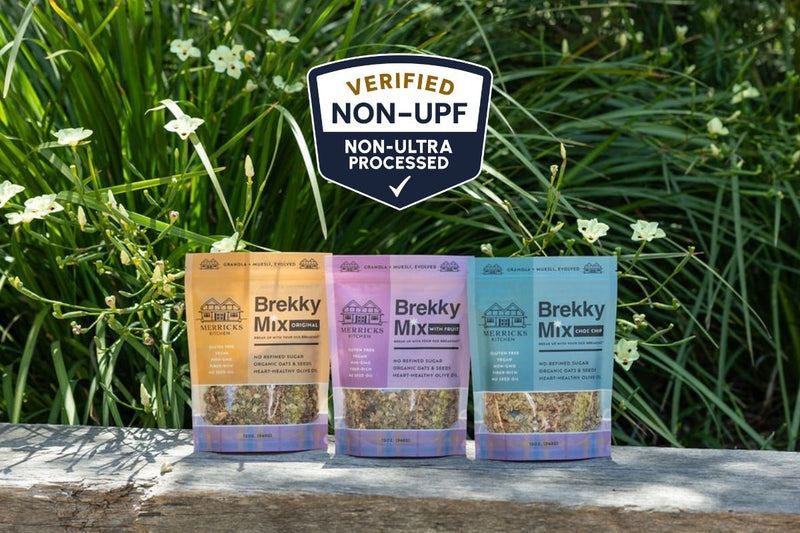
Foods from Group 1 modified by adding salt, sugar, oil, or other Group 2 ingredients using methods similar to home cooking. Examples: vegetables in brine, canned fish, freshly baked bread, cheese. These can be consumed alone or as part of meals. Think of what your grandmother might have made in her kitchen—pickles, bread, preserves - and healthy granola just like our three Brekky Mix flavors.
Group 4: Ultra-Processed Foods (UPFs)
Here’s where it gets concerning.
Ultra-processed foods are industrial formulations made from cheap ingredients with little to no whole food. They’re created through sequential industrial processes—fractioning high-yield crops into starches, sugars, oils, and proteins, then chemically modifying these components and combining them with industrial additives.
The goal? Products that are hyper-palatable, shelf-stable, and maximize corporate profits.
According to the Lancet research, common examples include “breakfast cereals, energy bars, and mass-produced packaged breads”—exactly what most Americans eat for breakfast.
Why Processing Level Matters More Than Nutrition Facts
Here’s what the food industry doesn’t want you to know: you can’t judge food quality by the nutrition facts panel alone.
Two products with similar calories, protein, and fiber can have drastically different effects on your health depending on how they’re processed. When I was developing Brekky Mix recipes, I knew I could hit any macro target I wanted by adding lab created ingredients like protein isolates, but that wasn’t the point. The point was creating something made from actual food.
The difference lies in what happens to the food matrix - the natural structure of whole foods. Ultra-processing disrupts this structure, chemically modifies food components, and adds functional additives to create products that your body processes differently than real food.
Think about it this way: your great-grandmother’s body knew what to do with an oat. It had evolved over millennia to process whole grains. But protein isolates? “Natural flavors”? Modified starches? Those didn’t exist in her world. Your body is trying to make sense of them in real time.
What the World’s Healthiest People Actually Eat
Research on the world’s longest-lived populations backs this up beautifully. A study published in the American Journal of Lifestyle Medicine identified five regions around the world—Blue Zones—where people reach age 100 at rates ten times higher than in the United States.
These populations in Loma Linda (California), Nicoya (Costa Rica), Sardinia (Italy), Ikaria (Greece), and Okinawa (Japan) share one striking dietary pattern: they eat minimally processed whole foods.
What they eat: whole oats, real nuts and seeds, olive oil, beans, garden vegetables.
What they don’t eat: ultra-processed breakfast cereals, protein isolates, “natural flavors,” refined seed oils.
The research shows only 20% of longevity is genetic. The other 80% comes from lifestyle and environment—primarily what these populations eat. And what they eat is the exact opposite of ultra-processed.
This Blue Zones research was actually one of my biggest inspirations for Brekky Mix. Why try to engineer better breakfast when centenarians have been eating simple whole foods for generations? Our ingredient list looks like what someone in Ikaria might assemble in their kitchen: oats, nuts, seeds, olive oil, a bit of maple syrup, real cinnamon and vanilla. No lab required.
The Red Flag Ingredients
When examining granola labels, certain ingredients immediately signal ultra-processing:
1. “Natural Flavors” — The #1 Red Flag
This is the smoking gun. Despite the wholesome-sounding name, “natural flavors” can legally mask dozens of individual chemical compounds created in laboratories. The FDA allows manufacturers to use this vague term for any flavoring substance derived from plant or animal sources, regardless of how extensively it’s been processed.
If a product truly tastes like vanilla or cinnamon, it should contain actual vanilla or cinnamon—not “natural flavors.”

When formulating Brekky Mix, I could have saved a lot using vanilla extract with “natural flavors” instead of real Madagascar vanilla powder. But I’d started this business specifically to avoid that kind of shortcut. If I’m going to use vanilla, you’re going to see “organic Madagascar vanilla powder” on the label. Period.
Organic Madagascar vanilla powder is a lot more expensive than vanilla extract because it's 100% vanilla powder from ground vanilla beans. Along with Ceylon cinnamon, these two ingredients allow us to use much less sugar and still deliver a complex flavor profile.
2. Seed Oils (Canola, Sunflower, Safflower)
These oils undergo extensive industrial processing: heating, chemical extraction, bleaching, deodorization. This heavy refining transforms them from whole-food sources into ultra-processed fats.
Research consistently shows populations with the longest lifespans use minimally processed fats like olive oil—not industrially refined seed oils. That’s why Brekky Mix uses olive oil. Not because it’s trendy. Because it’s what actually works for human health.
3. Added Sugars Beyond Whole-Food Sweeteners
While small amounts of maple syrup or honey can enhance flavor, many granolas contain 7-12 grams of added sugar per serving. The industry often uses multiple forms of sugar (cane sugar, brown rice syrup, corn syrup) to keep any single sugar from appearing first on the ingredient list—a labeling trick that masks total sugar content.
4. High Sodium
Most people don’t expect salt in breakfast foods. But many granolas contain 130-180mg of sodium per serving. In my analysis of 40+ granola brands, only 7 achieved zero sodium. That’s 17% of the market.
This hidden salt contributes to the hyper-palatability that makes ultra-processed foods so easy to overconsume. There’s no nutritional reason for sodium in granola. It’s there to make you crave more.
5. Long Lists of Unrecognizable Names
Here’s an important distinction: a long ingredient list of real whole foods (rolled oats, almonds, walnuts, pumpkin seeds, sunflower seeds, flaxseed meal, coconut) is completely different from a list containing industrial additives you can’t identify.
Apply the home kitchen test: could you make this product in your kitchen with ingredients from a farmers market? If the answer involves ordering industrial additives online, you’re looking at ultra-processed food.
Do you have pea protein or soy protein in your pantry? No, because they're not ingredients found in home kitchens - the definition of
The Scale of the Problem
According to Johns Hopkins, roughly 75% of the U.S. food supply is ultra-processed. Americans consume over half their daily calories from ultra-processed foods. Children consume close to 70%.
The breakfast category represents ground zero. The November 2025 Lancet study specifically identifies breakfast cereals and energy bars as common ultra-processed foods. When you consider that breakfast sets the metabolic tone for your entire day, starting with ultra-processed foods becomes even more concerning.
Understanding NOVA classification empowers you to make genuinely informed choices. It’s not about perfection—it’s about recognizing that how food is processed fundamentally affects how it impacts your health.
The world’s healthiest populations have known this instinctively for generations.
Now you do too.
The Health Risks: What the Science Actually Says
In November 2025, The Lancet published the most comprehensive examination of ultra-processed foods and human health to date. Forty-three international experts from leading research institutions compiled a three-paper series that represents a turning point in our understanding of how industrial food processing affects the human body.
The conclusion is unambiguous: higher consumption of ultra-processed foods is associated with increased risk across nearly every major organ system.
The 12 Chronic Conditions Linked to UPFs
The Lancet series analyzed 104 prospective studies involving millions of participants worldwide. The research identified statistically significant associations between UPF consumption and 12 chronic health conditions:
- Cardiovascular disease
- Type 2 diabetes (moderate evidence quality showing convincing association)
- Obesity (both general and abdominal)
- Coronary heart disease
- Cerebrovascular disease (stroke and related conditions)
- All-cause mortality (increased risk of death from any cause)
- Depression
- Chronic kidney disease
- Crohn’s disease (though evidence quality varied by study)
- Dyslipidemia (unhealthy blood lipid levels)
- Hypertension (high blood pressure)
- Non-alcoholic fatty liver disease
This research was reinforced by a comprehensive umbrella review published in The British Medical Journal, examining 14 meta-analyses covering nearly 10 million participants. The BMJ review found that higher dietary exposure to ultra-processed foods was associated with increased risk in 32 out of 45 pooled health outcomes analyzed.
The consistency across multiple large-scale studies, different populations, and various research methodologies provides compelling evidence. This relationship between UPF consumption and chronic disease is not coincidental.
Why Breakfast Matters Most
The morning meal sits at the heart of this crisis.
While breakfast cereals and granolas might seem like just one category among many, the Lancet research specifically calls out “breakfast cereals, energy bars, and mass-produced packaged breads” as common ultra-processed foods. That’s not random. That’s breakfast.
What makes breakfast particularly significant is metabolic timing. The first meal of the day influences blood sugar regulation, energy metabolism, and appetite control for hours afterward. When that first meal consists of ultra-processed foods, it triggers a cascade: rapid blood sugar spikes, inflammatory responses, cravings that shape food choices throughout the day.
"As a registered dietitian, I tell my clients that breakfast isn't just about preventing hunger - it's about setting your metabolic tone for the entire day. When you start with ultra-processed foods high in refined sugars and isolated proteins, you're triggering a blood sugar roller coaster that affects your energy, cravings, and food choices for the next 12 hours. That 7 AM "healthy" granola choice has a direct impact on whether you're reaching for a candy bar at 3 PM. The quality of your first meal matters more than most people realize."
Your 7 AM decision sets the trajectory for your 2 PM snack and your 6 PM dinner.
This is why getting breakfast right matters so much. It’s not just one meal - it’s the domino that tips the rest of your day.
Children at Greatest Risk
The evidence reveals a particularly alarming pattern for America’s youngest citizens.
According to data highlighted in The Lancet research, among American children aged 2-19, ultra-processed foods account for approximately 70% of their total calorie consumption. For adults, that figure is nearly 60%.
Children’s developing bodies are uniquely vulnerable. Their organs, metabolic systems, and taste preferences are still forming. Early and repeated exposure to hyper-palatable, nutrient-poor foods establishes eating patterns and health trajectories that persist into adulthood.
The research shows UPF consumption during childhood and adolescence is associated with higher energy density intake, increased free sugars, and trajectories toward obesity and metabolic dysfunction.
What children eat for breakfast today shapes their health outcomes decades later.
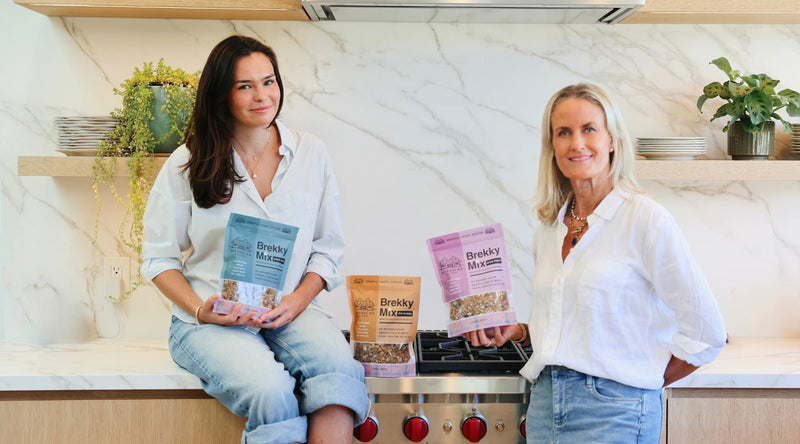
As a mother myself, this research hit home hard. It’s one of the main reasons I started Merricks Kitchen. I wanted breakfast options I felt genuinely good about giving my children. Not just foods that are “better than something else.” Options that are actually good for their health.
The Real-World Impact
These aren’t abstract statistics. They translate into real consequences for millions of American families.
The chronic diseases linked to ultra-processed foods are among the most prevalent and costly health conditions in the United States. Type 2 diabetes alone costs the American healthcare system hundreds of billions of dollars annually. Cardiovascular disease remains the leading cause of death.
The quality-of-life implications extend far beyond financial calculations: reduced mobility, chronic pain, shortened lifespan, diminished wellbeing.
What makes this particularly challenging, and, infuriating - is that many of these conditions are preventable. The research consistently shows that reducing ultra-processed food intake is associated with better health outcomes.
But making that change requires first understanding which foods qualify as ultra-processed. And the food industry has made that deliberately difficult through misleading marketing and unclear labeling.
Understanding the Strength of This Evidence
The power of this research lies not just in its scale but in its consistency.
The Lancet series employed rigorous systematic review methods, including meta-analyses that controlled for numerous confounding factors: smoking, physical activity, BMI, alcohol consumption. Many studies also adjusted for potential dietary mediator - key nutrients and food groups that might explain the associations.
The harmful associations persisted even after these adjustments.
This suggests the problem with ultra-processed foods extends beyond their basic nutrient profiles. The industrial processing itself - the disruption of food matrices, the addition of cosmetic additives, the creation of hyper-palatable flavors - appears to contribute to health harm independent of nutritional content.
Your body knows the difference between real food and engineered food, even when the nutrition labels look similar.
What This Means for Your Morning Bowl
This isn’t about creating fear around food. It’s about providing accurate information so you can make informed choices for yourself and your family.
The evidence shows that displacing whole foods and home-cooked meals with ultra-processed products represents a significant public health concern—one that begins each morning with breakfast.
You have more control than you think. Understanding what makes food ultra-processed gives you the power to choose differently. Starting tomorrow morning, if you want.
-----
References:
• The Lancet Series on Ultra-Processed Foods (November 2025)
• BMJ Umbrella Review on Ultra-Processed Foods
• American Journal of Lifestyle Medicine: Blue Zones Research
• Johns Hopkins Bloomberg School of Public Health on UPFs