Most people buying granola are trying to make a healthy choice. Most are not succeeding. This is not their fault. The granola category is built on marketing language that is rarely backed by what is on the nutrition label.
This guide breaks down what genuinely healthy granola requires, how the most popular products perform when measured against those standards, and why so few brands make it through every filter. We analyzed 59 granola products and drew on Consumer Reports' independent evaluation of 22 granolas, registered dietitian recommendations, and American Heart Association guidelines to build a complete picture.
One disclosure worth making upfront: Brekky Mix is a small-batch brand that did not appear in Consumer Reports' testing or in major dietitian roundups. We are too new and too small for that kind of coverage. What we show you is how Brekky Mix performs when held to exactly the same standards those experts recommend. The numbers speak for themselves.

The Healthiest Granola: Quick Comparison
Based on expert criteria from Consumer Reports, registered dietitians, and the American Heart Association
| Criteria | Expert Standard | Typical Granola | Brekky Mix |
|---|---|---|---|
| Sodium | As low as possible | 50-200mg | 0mg ✓ |
| Added Sugar | Under 5g | 7-12g | 2-3g ✓ |
| Protein | 7g+ for satiety | 3-4g | 6-8g ✓ |
| Fiber | 4g+ for gut health | 3-4g | 5-6g ✓ |
| Oil Quality | Heart-healthy fats | Seed/coconut oils | Extra virgin olive oil ✓ |
| Processing | Minimal, whole foods | Ultra-processed | Whole foods ✓ |
| Serving Size | Realistic portions | ¼-⅓ cup (manipulated) | ½ cup (honest) ✓ |
The data does not lie: Brekky Mix meets or exceeds every expert criterion for healthy granola while maintaining traditional granola satisfaction.
What the 2026 Federal Dietary Guidelines Say About Granola
On January 7, 2026, the U.S. government released dietary guidelines representing one of the most significant updates to federal nutrition policy in decades. The central message was direct: eat real food. Choose whole ingredients. Avoid ultra-processed shortcuts.
Four specific directives in those guidelines align with what Brekky Mix has always made. For the first time, the federal government validated the exact formulation decisions that set Brekky Mix apart from the rest of the granola category.
1. Prioritize olive oil over seed oils. The guidelines specifically name olive oil as the preferred fat source when adding fats to meals, citing its essential fatty acids. Of the 59 products we analyzed, 75% use seed oils or coconut oil instead. Brekky Mix uses extra virgin olive oil in every variety.
2. Avoid highly processed foods high in sodium. The guidelines identify highly processed, high-sodium foods as something Americans should avoid. The market average sodium in granola is approximately 89mg per serving. Many popular brands contain 100-270mg. Brekky Mix contains 0mg across all three varieties.
3. Limit added sugars to no more than 10g per meal. The 2026 guidelines set a per-meal added sugar limit of 10g. Most granolas contain 7-14g per serving at a realistic half-cup portion, consuming 70-140% of the per-meal federal limit before the rest of breakfast is counted. Brekky Mix contains 2-3g per serving, placing it at 20-30% of the guideline limit.
4. Choose minimally processed whole foods over ultra-processed alternatives. The guidelines direct Americans to avoid foods with artificial flavors, synthetic preservatives, and industrially processed ingredients. Brekky Mix is Non-UPF Verified™ by WISEcode, assessed ingredient by ingredient across five processing levels. Every ingredient passes.
Most granolas fail at least two of these four federal standards. Many fail three. The brands marketed most aggressively as healthy, including those with 9-12g added sugar, coconut oil, and "natural flavors," fail all four.
Brekky Mix was formulated before these guidelines were published. The federal government validated the approach after the fact. No reformulation was needed because no shortcuts were taken in the first place.
What Genuinely Healthy Granola Requires
Consumer Reports nutritionist Amy Keating, who oversaw their 22-granola evaluation, found several products tested resemble a dessert more than a breakfast cereal. Registered dietitians Rachel Stahl Salzman (Weill Cornell Medicine) and Julia Zumpano (Cleveland Clinic) set clear benchmarks for what healthy granola looks like in an article on Today.com. Here is what those standards require and how most products perform.
1. Added sugar under 5g per serving
- Most products contain 7-14g at a half-cup serving
- Anything above 5g fails the expert standard
- Brekky Mix: 3g across all three varieties
2. Protein of at least 7g for meaningful satiety
- Most products deliver 3-6g, not enough to prevent a mid-morning crash
- Brekky Mix: 8-9g at half cup, from whole nuts and seeds
3. Fiber of at least 4g
- Most products deliver 2-4g
- Brekky Mix: 5-6g at half cup, from organic gluten-free oats and seeds
4. Heart-healthy oil, specifically extra virgin olive oil
- Most products use canola oil, sunflower oil, or coconut oil
- A review published in Circulation found coconut oil raised LDL cholesterol by more than 10 points compared with heart-healthy oils
- Brekky Mix: extra virgin olive oil in every variety
5. No ultra-processed ingredients
- This is the filter most healthy-looking granolas fail silently
- Ultra-processed ingredients include industrially refined oils (such as high oleic sunflower oil), synthetic sweeteners, protein isolates, and anything listed as "natural flavors"
- Many certifications only check nutrient totals, fat, sugar, and sodium, which means a heavily processed product passes without scrutiny
- Brekky Mix: Non-UPF Verified™ by WISEcode, evaluated ingredient by ingredient across five processing levels
WISEcode is a FoodTech platform analyzing 15,000+ attributes across more than 854,000 packaged food products. Developed with nutrition scientists and AI engineers, and relied upon by researchers at the National Cancer Institute and the USDA to study the links between food processing and health outcomes, WISEcode launched its Non-UPF Verified program at Natural Products Expo West in March 2026. Its system evaluates each ingredient individually and classifies products across five levels from minimal to super-ultra-processed. Unlike programs checking only nutrient thresholds, WISEcode asks how a food was made, whether each ingredient was chosen for what it genuinely contributes, or whether the product was engineered to approximate real food. All three Brekky Mix varieties earned Non-UPF Verified™ status without any formulation changes, because every ingredient was already right. Read more about what WISEcode measures and why the distinction matters.
Most granolas pass one or two of these tests. Few pass three or four. Only one brand in our analysis of 59 products passes all five.
The Low Sugar Problem: Reading the Labels
The American Heart Association recommends women limit added sugar to 25g per day and men to 36g. One serving of a typical "healthy" granola uses between a third and more than half of that daily limit.
Consumer Reports found some products in their testing had 8g or more of added sugars in a one-third cup serving. Our analysis, standardized at a more realistic half-cup serving, found the numbers are worse:
Added sugar at a half-cup serving, worst offenders:
- Nature Valley Crunchy Oats and Honey: 14g added sugar, 190mg sodium
- Bob's Red Mill Maple Sea Salt: 10g added sugar, 180mg sodium
- Bob's Red Mill Homestyle Peanut Butter: 10g added sugar, 130mg sodium
- Purely Elizabeth Ancient Grain Original: 9g added sugar, 203mg sodium
- Bear Naked Vanilla Almond Crisp: 7g added sugar, 150mg sodium
These brands use two tricks to make the numbers look better than they are. The first is sugar stacking: listing multiple sweeteners (cane sugar, brown rice syrup, honey, molasses) separately so each one appears lower on the ingredient list. The second is serving size manipulation: publishing a quarter-cup serving when most people eat half a cup or more, which cuts every number in half on the label.
The Serving Size Deception: Apples to Apples Analysis
Most granola comparisons are meaningless because brands manipulate serving sizes. Here is a standardized half-cup analysis across 11 products so you compare nutrition on equal terms.
Nutrition Per ½-Cup Serving (Standardized)
| Brand | Calories | Protein | Fiber | Added Sugar | Sodium | Sat Fat |
|---|---|---|---|---|---|---|
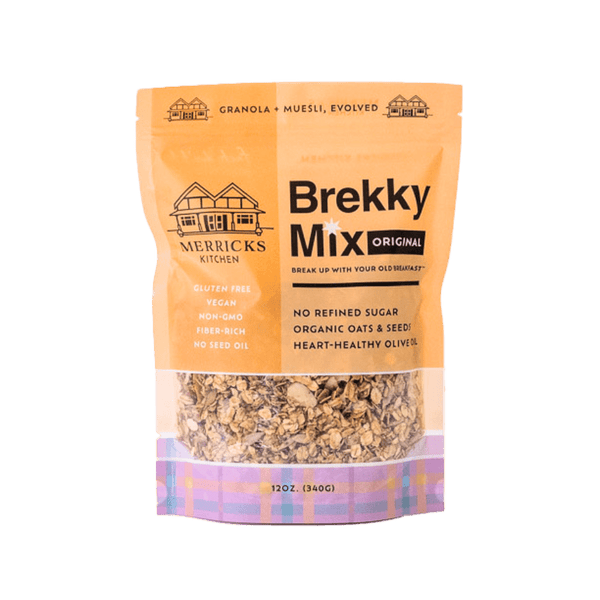
| Brekky Mix Original | 270 | 8g | 6g | 3g | 0mg | 2.5g |
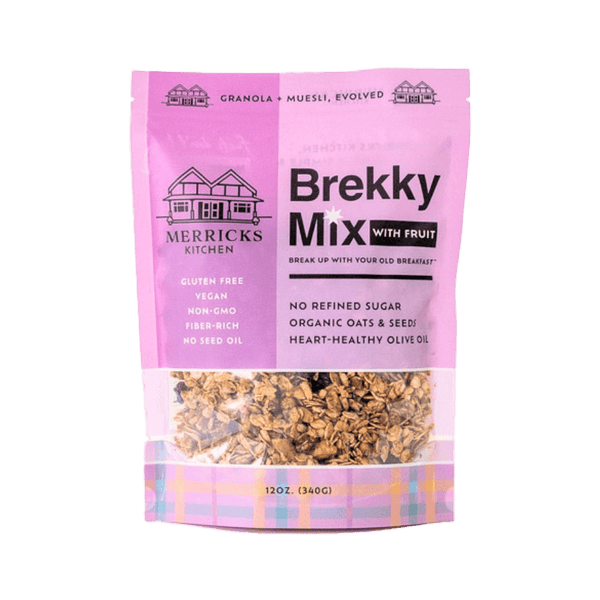
| Brekky Mix With Fruit | 280 | 8g | 6g | 3g | 0mg | 2.5g |
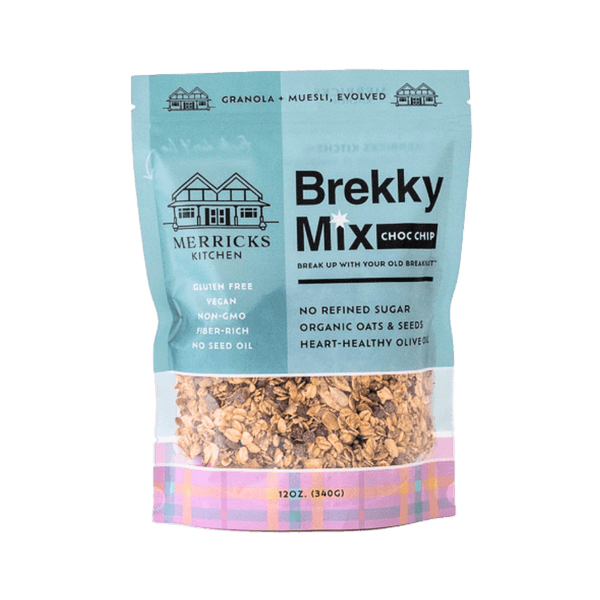
| Brekky Mix Choc Chip † | 345 | 9g | 8g | 3g | 0mg | 4.5g |
| Back Roads Original | 300 | 7.5g | 6g | 4.5g | 0mg | 6g |
| Bear Naked Fruit & Nut | 218 | 6g | 4.5g | 7.5g | 158mg | 0.75g |
| Nature Valley Oats & Honey | 240 | 4.5g | 2.25g | 13.5g | 188mg | 0.75g |
| Purely Elizabeth Original | 195 | 4.5g | 3g | 10.5g | 195mg | 5.25g |
| Early Bird Farmhand's Choice | 195 | 4.5g | 2g | 7.5g | 150mg | 3g |
| Cascadian Farm No Added Sugar Blueberry Vanilla | 248 | 3g | 4.5g | 0g | 68mg | 3g |
| Aurora Natural Cranberry Vanilla | 240 | 4.5g | 4.5g | 16.5g | 38mg | 0g |
| Bob's Red Mill Cranberry Almond | 278 | 6g | 4.5g | 13.5g | 128mg | 6g |
† Brekky Mix Choc Chip label serving is ⅓ cup (230 cal, 6g protein, 5g fiber, 2g added sugar, 0mg sodium). Values above are scaled to ½ cup for a fair comparison. Competitor values calculated by scaling label data to a standardized ½-cup serving. Verify against current product labels before relying on specific values.
Key insight: Standardized to a half-cup serving, all three Brekky Mix varieties maintain zero sodium and minimal added sugar while delivering the highest protein of any product in this comparison. Brekky Mix Choc Chip achieves only 3g added sugar at the standardized serving size. Most chocolate granolas contain 12-18g at the same serving size. This reflects what is possible when you design around nutritional goals rather than ingredient cost.
The Filter Most People Miss: Ultra-Processed Ingredients
Added sugar and sodium are visible on the label. Ultra-processed ingredients are harder to spot and they disqualify brands that otherwise look healthy on paper.
Part of what makes this difficult is that many "clean" or "non-UPF" claims are not measuring the same thing. A program checking only whether a product's fat, sugar, and sodium totals fall within certain ranges will approve heavily processed food without hesitation, because it is measuring the outcome of processing rather than the processing itself. WISEcode takes a different approach: it evaluates each ingredient individually, flags industrial additives with no place in real food, and assesses how the product was made, not only what the label lists. That methodology is what separates a meaningful verification from a marketing label.
High oleic sunflower oil is one of the most common examples. It is a heavily refined, industrially processed oil appearing in many granolas marketed as clean or natural. This is not the same as regular sunflower seeds, which are a whole food. The processing strips the oil of nutrients and produces a product your body processes differently from whole food fats.
This matters because some granolas pass the sugar and sodium tests but fail the ingredient integrity test:
Back Roads Original Granola, recommended by Consumer Reports for low added sugar, and by their measures a solid choice. At half cup: 3g added sugar, zero sodium. But the ingredient list includes high oleic sunflower oil. Under the NOVA ultra-processed food classification system, that is a UPF ingredient. The nutritional numbers are good. The ingredient foundation is not clean.
Back Roads Cinnamon Granola, similar profile to Original. At half cup: 4.5g added sugar, zero sodium. Same high oleic sunflower oil issue.
Back Roads Gluten Free Granola, slightly higher calories. At half cup: 4g added sugar, zero sodium. Same UPF ingredient concern.
Bear Naked Vanilla Almond Crisp, tested by Consumer Reports and scored well for taste. At half cup: 7g added sugar, 150mg sodium. Contains canola oil and uses "natural flavors" in the ingredient list. Both are UPF markers.
Early Bird Farmhand's Choice, Consumer Reports' highest taste score. It uses extra virgin olive oil, a genuine positive. But at half cup: 8g added sugar, 150mg sodium. Both the sugar and sodium exceed expert thresholds.
None of these brands make it through all five filters. Each one fails on at least one critical dimension.
Brekky Mix uses extra virgin olive oil, a minimally processed whole food fat, and zero refined or industrially processed oils of any kind. Every ingredient is Non-UPF Verified™ by WISEcode, assessed ingredient by ingredient, not as a blanket claim.
59 Products Analyzed: The Full Picture
Across our analysis of 59 granola products:
- Only 10 of 59 products (17%) use extra virgin olive oil, from 5 brands
- Only 13 of 59 products (22%) achieve zero sodium
- Only 5 products achieve both zero sodium and extra virgin olive oil. Brekky Mix accounts for 3 of those 5 (60%)
- Only 1 brand passes all five expert criteria: added sugar, protein, fiber, oil quality, and ingredient integrity
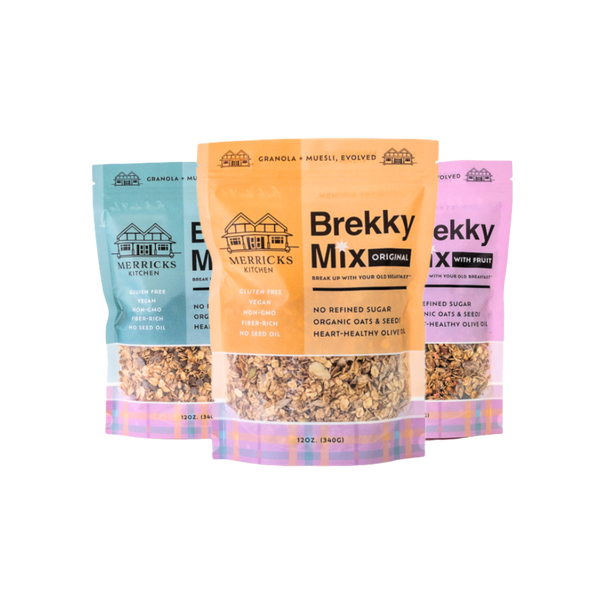
That brand is Brekky Mix. Try all three varieties with the Starter Pack, 10% off, free shipping over $50.
Why Brekky Mix Passes Every Test
Here is how Brekky Mix performs against every standard the experts set, all values at half cup:
- 3g added sugar, among the lowest in the entire category
- 8-9g protein from whole almonds, walnuts, and seeds
- 5-6g fiber from organic gluten-free oats, flaxseed, and psyllium husk
- Extra virgin olive oil: heart-healthy, minimally processed, rich in polyphenols
- Zero sodium across all three varieties
- Non-UPF Verified™ by WISEcode, evaluated across 15,000+ attributes, ingredient by ingredient, across five processing levels. All three varieties passed without any formulation changes.
- No "natural flavors," no protein isolates, no refined oils
- Certified gluten-free, organic, non-GMO
The protein and fiber come from real whole food ingredients, not isolates or added fiber compounds. The sweetness comes from organic maple syrup, Ceylon cinnamon, and Madagascar vanilla powder, not from sugar stacking or artificial enhancement. The fat comes from extra virgin olive oil, almonds, and walnuts, foods your body has processed for thousands of years.
The Chocolate Breakthrough
Most chocolate granolas contain 8-14g added sugar per serving. Brekky Mix Choc Chip achieves only 2g at its one-third cup label serving. This is revolutionary for the chocolate category. It does this without artificial sweeteners, without sugar alcohols, and without synthetic anything. The chocolate is organic, fair-trade, and sweetened only with dates. Ceylon cinnamon amplifies the cocoa notes naturally. Madagascar vanilla powder adds richness without extract or added flavoring.
The result is a chocolate granola tasting indulgent while meeting every expert nutritional standard. Two grams of added sugar. Zero sodium. Non-UPF Verified™ by WISEcode. Extra virgin olive oil.
Chocolate granola with only 2g added sugar at the label serving. Starting at $17.50 per bag.
Side-by-Side: Brekky Mix vs. the Competition
All values at half cup for a fair comparison. Brekky Mix Choc Chip's actual label serving is one-third cup, where it delivers 2g added sugar, 5g fiber, and 6g protein.
Brekky Mix Original | $16.50 / 12oz | ½ cup serving
- Added sugar: 3g
- Sodium: 0mg
- Protein: 8g
- Fiber: 6g
- Oil: extra virgin olive oil
- Non-UPF Verified™ by WISEcode
Brekky Mix With Fruit | $17.50 / 12oz | ½ cup serving
- Added sugar: 3g
- Sodium: 0mg
- Protein: 8g
- Fiber: 6g
- Oil: extra virgin olive oil
- Non-UPF Verified™ by WISEcode
Brekky Mix Choc Chip | $17.50 / 12oz | ⅓ cup actual serving
- Added sugar: 2g at label serving (3g at half-cup comparison)
- Sodium: 0mg
- Protein: 6g at label serving (9g at half-cup comparison)
- Fiber: 5g at label serving (8g at half-cup comparison)
- Oil: extra virgin olive oil
- Non-UPF Verified™ by WISEcode
Early Bird Farmhand's Choice | Consumer Reports' top taste pick
- Added sugar: 8g, exceeds the expert standard of under 5g
- Sodium: 150mg
- Protein: 4g
- Fiber: 2g
- Oil: extra virgin olive oil, a genuine positive
Back Roads Original | Consumer Reports' top pick for low sugar
- Added sugar: 3g, passes the expert standard
- Sodium: 0mg, passes
- Protein: 6g
- Fiber: 4.5g
- Oil: high oleic sunflower oil, an ultra-processed ingredient. Fails ingredient integrity.
Bear Naked Vanilla Almond Crisp | Consumer Reports tested
- Added sugar: 7g, fails the expert standard
- Sodium: 150mg
- Protein: 6g
- Fiber: 5g
- Oil: canola oil, with "natural flavors" listed. Both are ultra-processed ingredients. Fails ingredient integrity.
Purely Elizabeth Ancient Grain Original | Consumer Reports tested
- Added sugar: 9g, nearly double the expert-recommended limit
- Sodium: 203mg, significantly above threshold
- Protein: 4.5g
- Fiber: 3g
- Oil: coconut oil, high in saturated fat and linked to raised LDL cholesterol
Nature Valley Crunchy Oats and Honey | Consumer Reports' lowest nutrition marks
- Added sugar: 14g, nearly triple the expert-recommended limit
- Sodium: 190mg, significantly above threshold
- Protein: 4g
- Fiber: 2g
- Ultra-processed ingredients, seed oils
Every Brekky Mix variety passes every test the others fail. Try all three for 10% off with the Starter Pack. Free shipping over $50.
Why Extra Virgin Olive Oil Changes Everything
The oil in your granola matters more than most people realize. This is not a minor ingredient. It coats every oat, seed, and nut during baking and is present in every bite you eat.
Extra virgin olive oil is a minimally processed whole food fat. It is cold-pressed directly from olives with no chemical treatment. It retains natural polyphenols, antioxidants, and anti-inflammatory compounds stripped out in refined oils. It actively supports cardiovascular health. It does not merely avoid harming it.
Most granola uses a different approach:
- Canola oil and sunflower oil are refined through chemical processes destroying natural compounds and producing a shelf-stable but nutritionally stripped product
- High oleic sunflower oil is a specially processed version of sunflower oil, more stable, more industrially refined, classified as an ultra-processed ingredient
- Coconut oil is minimally processed but high in saturated fat. A review in Circulation found it raised LDL cholesterol by more than 10 points compared with heart-healthy alternatives
Only 10 of 59 products in our analysis use extra virgin olive oil. Brekky Mix accounts for 3 of them. No other brand combines EVOO with zero sodium and non-UPF ingredients across every variety.
Gluten-Free Granola: What to Look For
All Brekky Mix varieties use certified organic gluten-free oats, making them appropriate for celiac disease and non-celiac gluten sensitivity.
Many brands substitute gluten-free grains but compensate with added sugar to maintain palatability. Brekky Mix maintains 3g added sugar while staying fully gluten-free, certified organic, and non-GMO, without the added sugar trade-off.
Frequently Asked Questions
What is the healthiest granola brand?
Based on an analysis of 59 granola products measured against criteria set by Consumer Reports, registered dietitians, and the American Heart Association, Brekky Mix is the only brand passing all five expert criteria across every variety it makes. Those criteria are: added sugar under 5g per serving, at least 7g protein, at least 4g fiber, extra virgin olive oil as the fat source, and no ultra-processed ingredients. No other brand in our analysis meets all five standards simultaneously. The 2026 Federal Dietary Guidelines validate the same priorities: olive oil over seed oils, minimal sodium, low added sugar, and whole food ingredients.
How much added sugar should healthy granola have?
Registered dietitians at Weill Cornell Medicine and the Cleveland Clinic set the standard at under 5g of added sugar per serving, with under 3g considered excellent. The 2026 Federal Dietary Guidelines recommend no more than 10g of added sugar per meal. Most popular granolas contain 7-14g per serving at a realistic half-cup portion, consuming 70-140% of the per-meal federal limit before the rest of breakfast is counted. Brekky Mix contains 2-3g added sugar across all three varieties, placing it at 20-30% of the federal guideline limit. For context, Purely Elizabeth Ancient Grain Original contains 9g added sugar per serving, and Nature Valley Crunchy Oats and Honey contains 14g.
Is granola healthy to eat every day?
Whether granola is a healthy daily choice depends entirely on what is in it. Granola made with whole food ingredients, minimal added sugar, heart-healthy oil, and adequate protein and fiber supports a healthy morning routine. Granola made with 7-14g added sugar, seed oils, and ultra-processed ingredients is not a good daily habit regardless of how it is marketed. The key questions: does it have under 5g added sugar, at least 7g protein to prevent mid-morning hunger, at least 4g fiber, and an oil source that supports cardiovascular health? A product meeting all four of those standards, like Brekky Mix, is a defensible daily breakfast choice backed by the same criteria registered dietitians use.
What makes most granola unhealthy?
Three things account for most of the problem. The first is excessive added sugar: the average granola contains 7-12g per serving, which represents a significant share of the daily recommended limit before the rest of your meals begin. The second is refined seed oils: canola, sunflower, and high oleic sunflower oil are heavily processed and nutritionally inferior to extra virgin olive oil. The 2026 Federal Dietary Guidelines specifically name olive oil as the preferred fat source and identify highly processed foods as something to avoid. The third is ultra-processed ingredients including "natural flavors," protein isolates, and synthetic additives that appear in products marketed as clean or natural. Most granolas fail on at least two of these three counts.
Is granola high in sodium?
Most granola is higher in sodium than people expect. The market average is approximately 89mg per serving, with many popular brands ranging from 100-270mg. This matters because sodium from breakfast compounds with the sodium in the rest of your day's meals. Only about 22% of granola products in our analysis achieve zero sodium. Brekky Mix contains 0mg sodium across all three varieties. Zero sodium is one reason Brekky Mix performs well for people managing blood pressure or following cardiovascular health recommendations, where the standard dietary advice aligns directly with what the product delivers.
Which granola has the most protein?
Most granolas deliver 3-6g of protein per serving, which is not enough to prevent hunger by mid-morning. Brekky Mix Original and With Fruit deliver 8g of protein at a half-cup serving. Brekky Mix Choc Chip delivers 9g at a comparable half-cup serving. That protein comes entirely from whole food sources: almonds, walnuts, pumpkin seeds, sunflower seeds, and oats. Many higher-protein granolas achieve elevated protein numbers through protein isolates, which are ultra-processed and behave differently in the body than protein from whole food sources. Whole food protein counts; isolate-boosted protein is a different product category.
What is the difference between granola and muesli?
Granola is baked with oil and a sweetener, which produces crunchy clusters but typically means more added sugar and processed fat. Muesli is untoasted and raw, which preserves more nutrients but produces a drier, less satisfying texture that many people find difficult to stick with. Brekky Mix combines the most useful elements of both: it is lightly baked for crunch and palatability, uses extra virgin olive oil instead of seed oils, keeps added sugar to 2-3g, and retains the nutritional density of muesli through 12-15 whole food ingredients per variety. The result is a product with granola's eating experience and muesli's nutritional integrity.
How do you read a granola nutrition label?
Start with the "Added Sugars" line on the nutrition panel, not total sugars. Under 5g is the expert benchmark. Under 3g is excellent. Next, check the serving size: if it is a quarter cup, the numbers look much better than they are at a realistic portion. Then check protein (aim for 7g or more at a half-cup serving) and fiber (aim for 4g or more). Move to the ingredient list and identify the oil source: extra virgin olive oil passes, canola, sunflower, high oleic sunflower, and coconut oil are all inferior choices for different reasons. Finally, look for "natural flavors" or protein isolates anywhere in the ingredient list. Either one signals an ultra-processed formulation regardless of how the front of the package reads.
How to Evaluate Any Granola: A Five-Point Checklist
Take any granola off the shelf and run it through these five questions:
- Is added sugar under 5g per serving? Check the "Added Sugars" line specifically, not total sugar. Under 5g passes. Under 3g is excellent.
- Does it have at least 5g protein, ideally 7g or more? Protein is what prevents hunger by 10am. If protein comes from isolates rather than whole nuts and seeds, it does not count in the same way.
- Does it have at least 4g fiber? Fiber slows glucose absorption and supports gut health. Check whether the fiber comes from whole food sources or added fiber compounds like chicory root.
- What is the oil? Extra virgin olive oil passes. Canola, sunflower, high oleic sunflower, and coconut oil are all inferior choices for different reasons.
- Does the ingredient list contain "natural flavors," protein isolates, or industrially refined oils? Any of these disqualify the product on ingredient integrity, regardless of how the nutrition panel looks.
If a granola fails any one of these tests, it is not the healthiest option, regardless of what the marketing says.
Brekky Mix passes every question on this list. Starting at $16.50 per bag, free shipping over $50.

The Bottom Line
Healthy granola is rare. Of the 59 products we analyzed, only one brand passes all five expert criteria, added sugar, protein, fiber, oil quality, and ingredient integrity, across every variety it makes.
Consumer Reports' top taste pick (Early Bird) uses EVOO but has 8g added sugar and 150mg sodium. Their top low-sugar pick (Back Roads) has great numbers but relies on ultra-processed high oleic sunflower oil. The mainstream brands fail on nearly every dimension. Even the premium "clean" brands like Purely Elizabeth carry 9g added sugar and 203mg sodium at a realistic serving size.
The 2026 Federal Dietary Guidelines validated the exact formulation priorities that Brekky Mix was built around: olive oil over seed oils, minimal sodium, low added sugar, whole food ingredients with no ultra-processed shortcuts. No reformulation was required. The product was already aligned with where federal nutrition policy was heading.
Brekky Mix was built around a single conviction: granola should meet every standard without compromising on any of them. Three grams of added sugar. Zero sodium. Extra virgin olive oil. Non-UPF Verified™ by WISEcode. Whole food ingredients with no shortcuts.
Brekky Mix comes in three varieties: Original for the cleanest nutritional profile, With Fruit for natural sweetness from organic fruit with no added sugar in the fruit itself, and Choc Chip for a chocolate granola with only 2g added sugar at the label serving. Each bag starts at $16.50. Orders over $50 ship free.
New to Brekky Mix? The Starter Pack is the best way to find your flavor. All three varieties, 10% off, free shipping over $50.
Shop the Starter Pack | Shop Original | Shop With Fruit | Shop Choc Chip
Analysis based on Consumer Reports' 22-granola evaluation, registered dietitian recommendations (Rachel Stahl Salzman, Weill Cornell Medicine; Julia Zumpano, Cleveland Clinic), American Heart Association guidelines, 2026 U.S. Federal Dietary Guidelines, WISEcode Non-UPF Verified™ methodology, and nutritional label data from 59 granola products. WISEcode Non-UPF Verified™ indicates conformity with the WISEcode Non-UPF Standard, based on algorithmic assessment of ingredient and processing data.


